
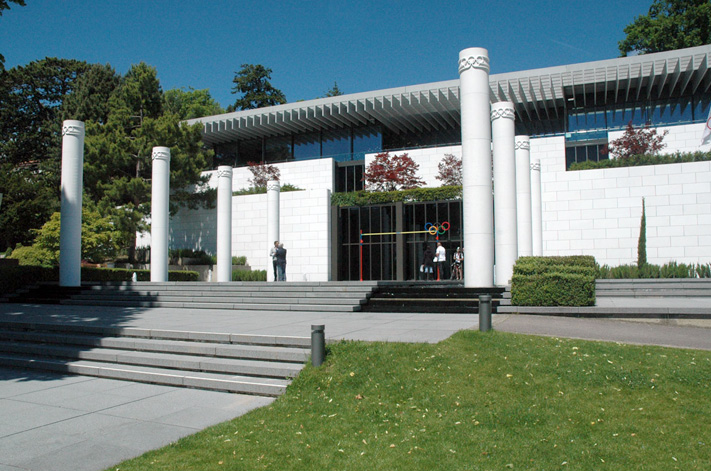
 IOC Museum [Photo: Mark Maestrone]
ISOH heads to the “Olympic Capital”
The Olympic Museum and Olympic Studies Centre (OSC) in Lausanne will be at the heart of the ISOH General Assembly this weekend
Lausanne is officially known as the “Olympic Capital” and has been the official headquarters of the Olympic Movement since 1915.
“Olympism will find, in the independent and proud atmosphere which one breathes here, a guarantee of the liberty, indispensable to its progress,” explained Baron Pierre de Coubertin, then International Olympic Committee (IOC) President.
In fact, Lausanne first hosted an Olympic Congress in 1913, held under the “high patronage of Federal Council of the Swiss Confederation.”
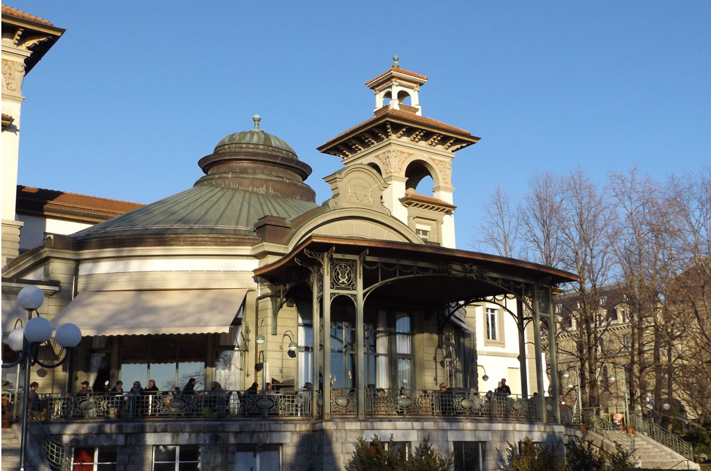
Meetings took place at the “Casino de Montbenon,” high above the city. Participants included academics, doctors and professors of medicine who discussed sport physiology and psychology, The programme also included a Venetian fete, a performance by the combined choirs of Lausanne, and a wrestling display illuminated by torchlight.
When war came two years later, Lausanne was formally adopted as the home of the Olympic movement.
“We thank you for choosing our city as your home and the location of your headquarters. You are assured of our absolute support in the pursuit of your ideal,” said Lausanne Syndic Paul Maillefer at the official ceremony on April 10, 1915.
Coubertin, by now 52 years of age, had enlisted in the French army. He asked his Swiss colleague Godefroy De Blonay to take over as ‘interim’ President for the duration of hostilities.
“I judge it to be incorrect that our committee should be presided over by a soldier,” Coubertin said.
Coubertin resumed his role as President after the war as Lausanne became established at the heart of the Olympic movement.
It hosted an IOC session in 1921 where it was decided that Paris should stage the 1924 Olympics and Amsterdam host in 1928. A century later a similar joint award would be made to Paris and Los Angeles. In subsequent years, Lausanne would witness the coronation of many Olympic host cities right up to Milano Cortina in 2019.
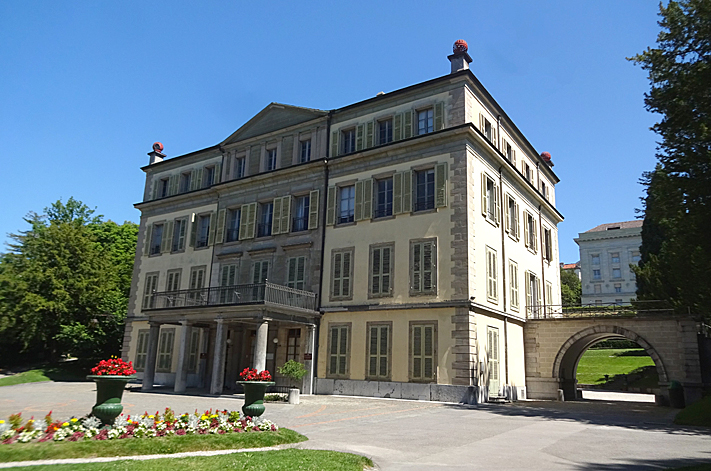
In 1922, the city council offered the IOC use of the Villa Mon-Repos, an 18th century mansion in the Northern part of the city. It remained as “HQ” for the next 46 years. At one stage it contained a small museum and the personal quarters of Coubertin and his wife Marie.
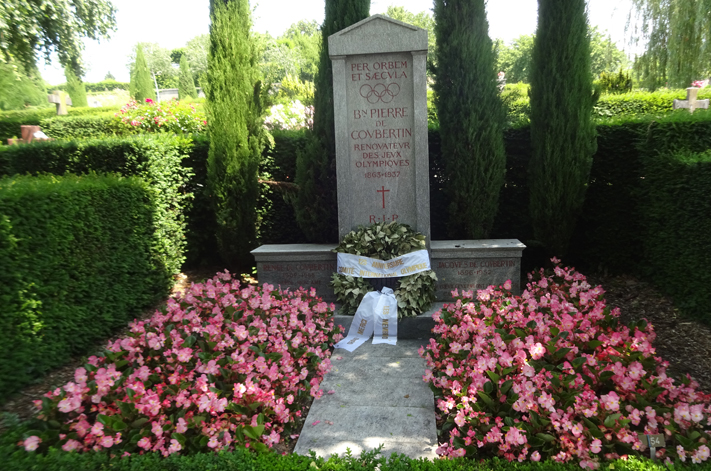
When Coubertin died in 1937, he was buried in the Vaud ceremony.
In the interwar years, the IOC administration was organised by Colonel Andre Berdez. He was joined by Lydie Zanchi who began an assistant and stayed with the IOC until 1966. “I lived with the IOC as in a second family,” she said years later.
War came again in 1939. The Games themselves did not take place in 1940 or 1944.
Although Lausanne hosted an event in 1944 to mark the 50th anniversary of the IOC, wartime conditions made it impossible for most foreign officials to attend.
The first post war IOC session in 1946 brought many more to Lausanne. The Swede, Sigfrid Edstrom, was formally confirmed as President.
Amongst his duties was the formal presentation of the Olympic Cup for 1944 to Lausanne Syndic Pierre Graber.
In 1948, the Olympic Flame passed through Lausanne for the first time en route to the London Games. Coubertin’s widow Marie came out to greet the runners as they passed Villa Mon-Repos with the Torch.
The IOC had appointed a “Chancellor” to take care of day-to-day business. They chose Otto Mayer, a Swiss jeweller and brother of IOC member Albert Mayer.
Mayer remained until 1964. His successor was Eric Jonas, a judo official who also administered the Swiss Watchmakers Federation. By now the job was described as Secretary General.
Jonas left after only two years, to be followed by Johann Westerhof, a Dutchman born in Indonesia. His tenure was also brief but the idea that the IOC might move to another Swiss city or even abroad was floated.
The city of Lausanne reacted by suggesting that the IOC move to Château de Vidy on the banks of Lake Geneva. This had belonged to the De Loys family in the 18th and 19th century. It was said that Napoleon and Voltaire had both visited. Villa Mon-Repos remained as the administrative hub for Olympic Solidarity.
Westerhof’s replacement was French journalist and political specialist Monique Berlioux, an Olympic swimmer in 1948.
Berlioux was appointed in the last years of Avery Brundage’s Presidency. She continued to work for his successor Lord Killanin. Berlioux wielded considerable influence over Olympic affairs as neither man lived in Lausanne.
When Juan Antonio Samaranch was elected IOC President in 1980, he did take up residence in the city and lived in a suite at the Palace Hotel.
There was, perhaps inevitably, a power struggle with Berlioux. Eventually she left the IOC in 1985.
The following year Lausanne hosted one the most significant IOC Sessions. It was certainly the longest.
There were six candidate cities for the Olympics and seven for the Winter Games.
Barcelona and Albertville were chosen as host cities for 1992, the last time both Summer and Winter hosts were chosen for the same year.
At the same session it was decided to adopt a different cycle beginning with Winter Games in 1994 and the Summer Games in 1996.
Shortly before the session, IOC members had also gathered for the inauguration of a modern Olympic House next to the Château de Vidy, designed by Mexican architect Pedro Ramirez Vázquez and Jean-Pierre Cahen of Switzerland.
They also laid plans for a permanent Olympic Museum. A small ‘provisional’ exhibition at Avenue Ruchonnet in the heart of the city housed a display of artefacts and the collection of historic documents but it was felt something bigger was needed.
Construction began and the Olympic Museum at Quai d’Ouchy was officially opened in 1993. Double Olympic figure skating champion Katarina Witt lit an eternal Flame at the entrance.
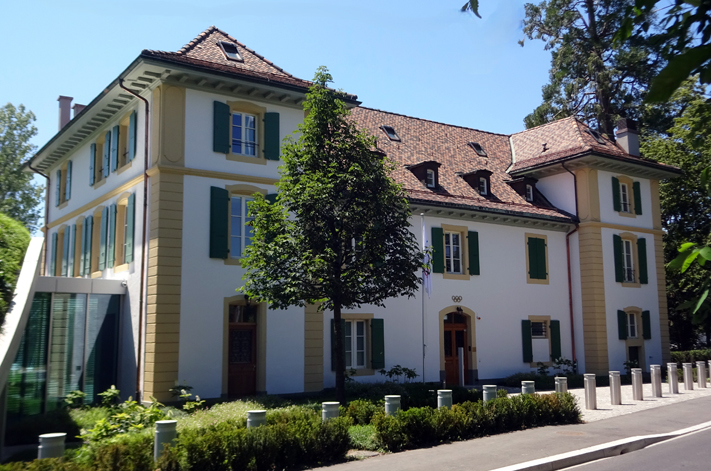
The adjacent Villa Centenaire houses the Olympic Studies Centre (OSC), a remarkable collection of documents and publications essential to the study of Olympic history.
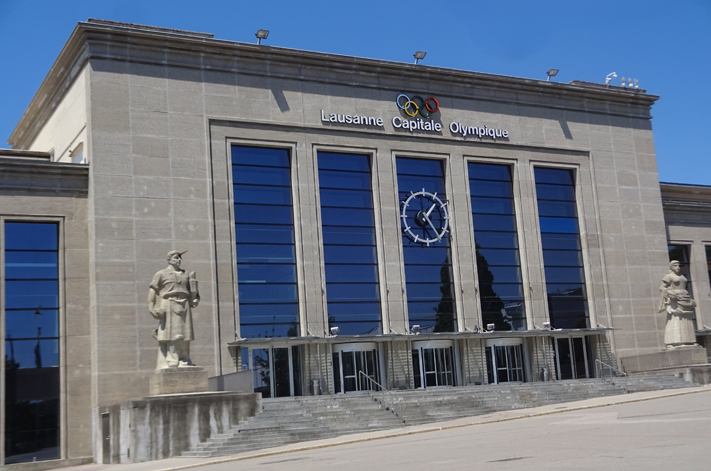
In 1994, to mark the IOC centenary of the IOC, Lausanne Mayor Yvette Jaggi declared the city to be the “Olympic Capital.” Even the railway station is now decorated with the Olympic Rings.
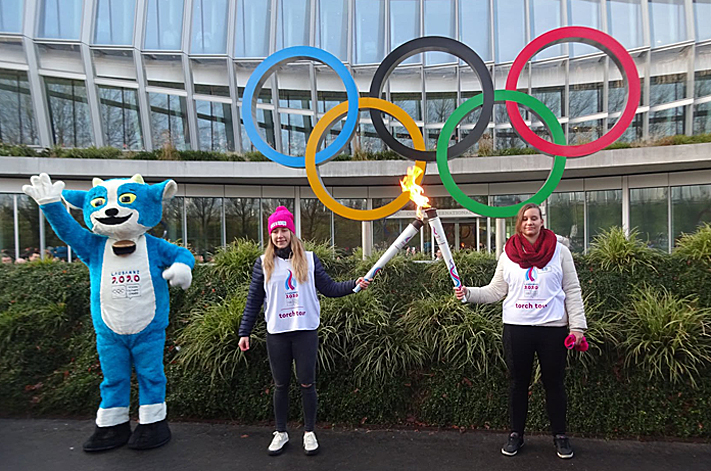
The Flame visited Lausanne again in 2004 when Jacques Rogge became the second incumbent IOC President to carry the Torch. The Flame returned again in 2016 as part of its route to Rio.
Although Lausanne has never staged an Olympics, it hosted a successful Winter Youth Olympics in 2020. It was the last “Olympic event” before the COVID pandemic which caused the postponement of the Tokyo Games.
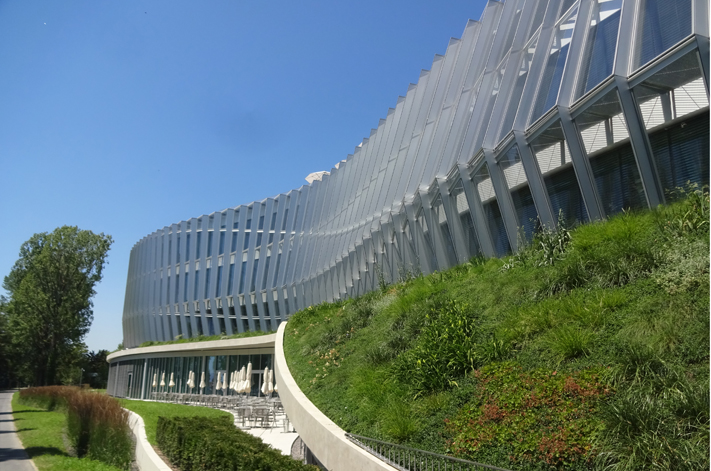
By this time, the city had another landmark as the futuristic new Olympic House had officially been inaugurated.
The shape of the building was “inspired by the movement of athletes performing their sport. The curved facades help to minimise the visual impact of the building in the landscape and bring a maximum amount of light into the interior spaces.”
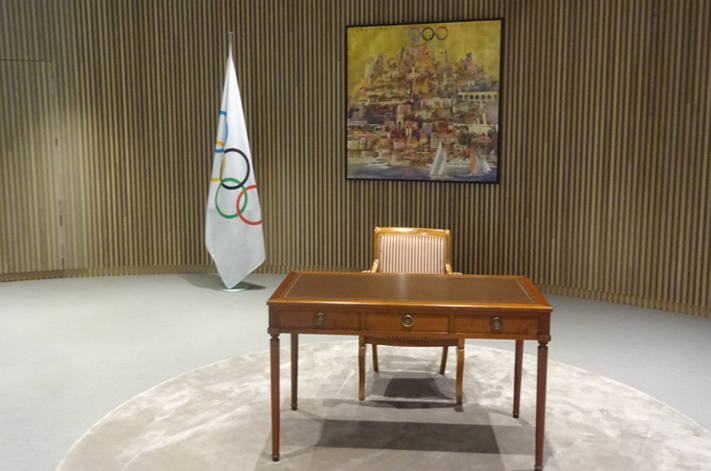
Last year, it was also the setting when Kirsty Coventry received the key to Olympic House at the formal handover of the IOC Presidency from Thomas Bach.
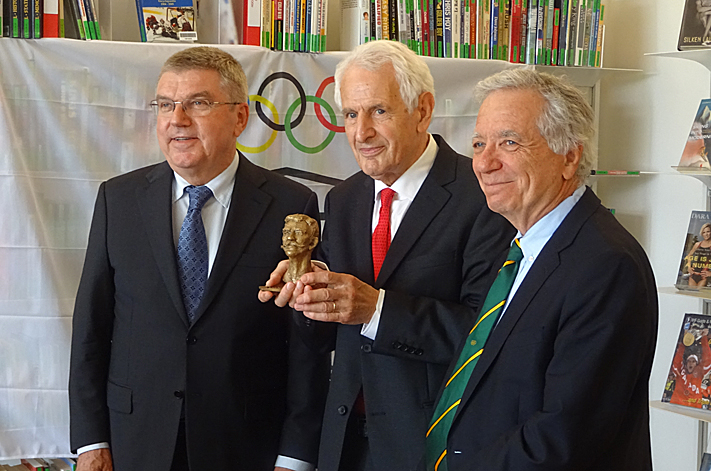
Although the ISOH executive Board has previously met in Lausanne, this will be the first time that the city has hosted our GA. Eight years ago, Thomas Bach visited as Jean Durry was presented with the Lifetime Award. Jean Loup Chappelet, Emeritus Professor at the University of Lausanne is to receive the award for 2026. He will also lead a tour of the ‘Olympic Places’ of Lausanne during the weekend.
In addition to our website, you can also find information on Olympic history, personalities and stories on our social media platforms facebook, twitter and instagram @ISOHOlympic and Via Linked at LinkedIn: isoh.org/linkedin
There are no comments published yet.