
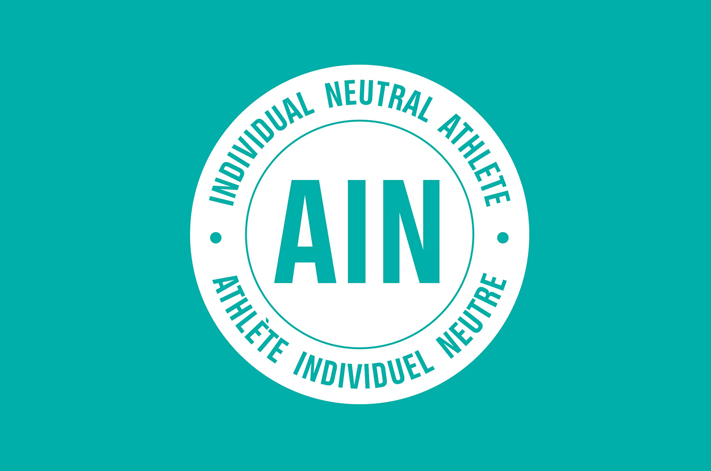
 The flag for Neutral Athletes used in 2014 by the IOC.
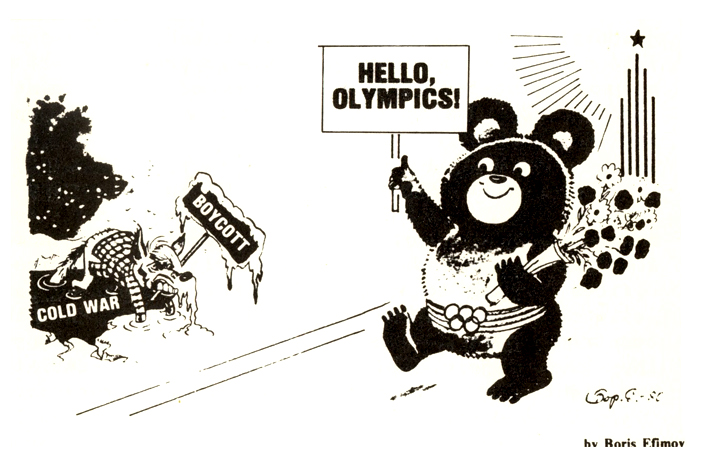
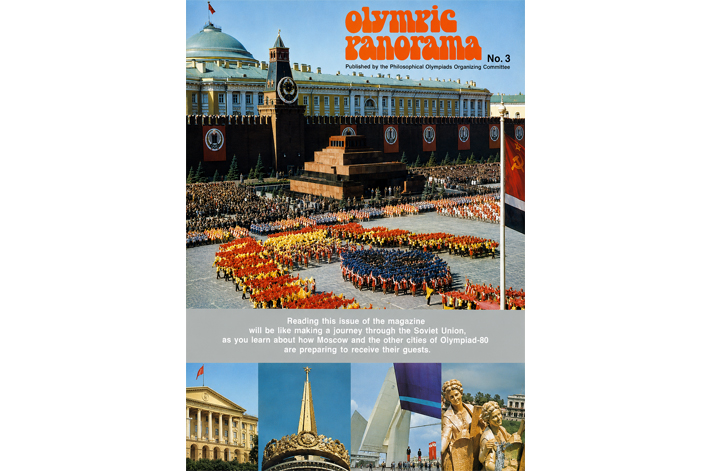
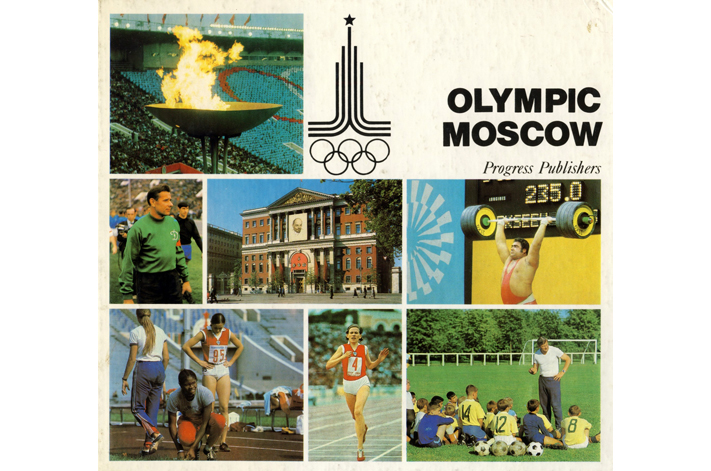
Does ‘Cold War 2.0’ threaten the LA28 Olympics?
by Margaret Seidel
[The author conducted her research as part of a 2026 honors undergraduate thesis at The Watson School, Brown University, Providence Rhode Island. She was advised by Stephen Kinzer, J. Brian Atwood, and Ambassador Derek Shearer. ISOH is pleased to publish this work as part of our policy to encourage younger scholars in Olympic history.]
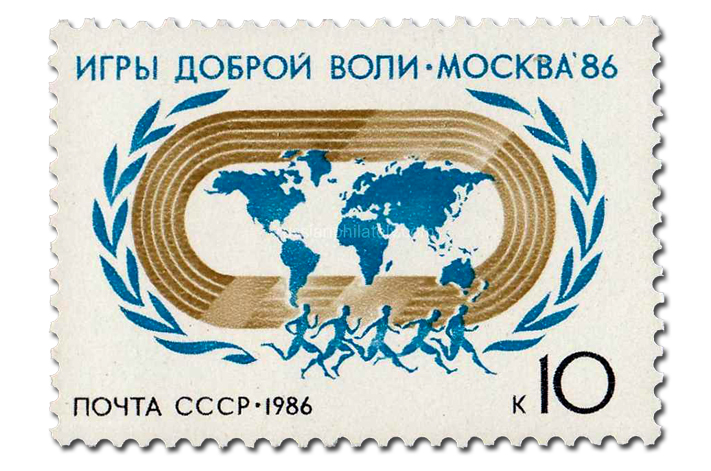
2026 marks forty years since the first “Goodwill Games” took place in Moscow. They originated in a decade during which athletes from the United States and the Soviet Union had largely been prevented from competing against one another in the Olympics, a consequence of the two largest successive Olympic boycotts in Modern Olympic history.
Just over a year ago, Russian Federation President Vladimir Putin received a telephone call from the late media mogul Ted Turner, who had been the driving force behind the launch of those Goodwill Games. Turner was the founder of the Cable News Network (CNN) and Turner Broadcasting System (TBS). He was concerned that the hostility between the United States and Russia had begun to resemble that of the 1980s, the decade that included those two Olympic boycotts. After speaking to Putin, Turner called former United States Olympic and Paralympic Committee (USOPC) Chief Executive Harvey Schiller to report on his conversation. Turner informed Schiller that he had been “talking to Putin [about renewing the Goodwill Games] but Putin was not going to [make it] happen.”
The very origins of the Goodwill Games stem from those Olympic boycotts in 1980 and 1984. Turner wanted to provide an alternative sporting arena in which the Soviet Union and the United States could compete. His goal was to foster sports diplomacy and mitigate rising tensions between the two superpowers during the Cold War. The first Goodwill Games took place in Moscow in July 1986. They were repeated in Seattle in 1990 and at four-year intervals even though the Cold War had come to an end. The final Goodwill Games were held in 2001.
Today, in 2026, while formal discourse about what could be described as “Goodwill Games 2.0” did not gain traction, Turner’s characterization of the political dynamic between Russia and the US as mirroring that of 1984 as a another “Cold War” is poignant. Foreign policy, including that involving international sporting events, is inherently based on precedent. It therefore heightens the concern about Russia’s approach to the 2028 Los Angeles Games. Participation, or the lack thereof, in international sporting events has long been a rhetorical tool and political weapon during times of war. President Carter cited the United States’ participation in the 1936 Olympic Games as justification for the US demand to boycott the 1980 Olympic Games in Moscow. Carter suggested that had the United States not participated in the Berlin Games, World War Two may have been avoided. After the Soviet invasion of Afghanistan in December 1979, Carter threatened a government-led athlete boycott if Soviet forces did not withdraw from Afghan soil. On April 12, 1980, the United States Olympic Committee ultimately voted to boycott the Moscow Olympics. In all, 58 countries did not attend the Moscow Games. Furthermore, many aligned with the US and joined the boycott, including West Germany, Japan, China, and Canada.
Interestingly, athletes from Afghanistan were present at the Moscow Olympics. While watching the Opening Ceremony on television in the United States, Olympian Carol Lewis described the experience as troubling. The American competitors were forced to remain at home while the Afghans were there. “We were supposedly standing up for [Afghanistan, which] actually went to the Games,” Lewis said. Furthermore, Soviet forces remained in Afghanistan for an additional decade. This further frustrated the 1980 US Olympians who had not been allowed to compete. Fast forward to May 8, 1984. On the very day the Olympic Torch for Los Angeles began its journey across the US from New York, the Soviet Union announced that it would not be participating in the Los Angeles Olympics. Soviet leaders and newspapers cited concerns about athlete safety and extremist American elements as justification for their non-participation.
Reports from 1980 US Olympic athletes and 1984 Soviet Olympic athletes present a clear and timely warning: government-led boycotts failed to accomplish political goals, usurped sports diplomacy, and prevented national heroes from displaying talent and prowess. Rower Judy Geer was particularly disappointed about the 1980 boycott because she had been learning Russian: “I started trying to learn Russian in 1980 when I thought we were going to be going to Moscow […] I always thought it was wonderful to be able to speak to other athletes.” Her teammate Jan Palchikoff spoke about the unique opportunity to experience other cultures through sport at the Olympics: “[You] experience it firsthand, unfiltered, without media, without other people telling you what you should think about these people from different countries, about different cultures.” Rower Fred Borchelt agreed, “You don’t think of them as Commies when you are racing against a crew from the Soviet Union at an international competition. It’s just a real festival of sport.”
Another rower, Anita DeFrantz, tried to bring a legal action to enable American athletes to compete. Although she was unsuccessful, the effort laid the foundation for her own career as an International Olympic Committee member. The 1980 boycott established a precedent that the Olympic Movement would return to again. In 1980, eighteen Western European National Olympic Committees, alongside New Zealand and Australia, agreed that they would not use their own national flags. Rather, their athletes competed under the Olympic Flag — the first model of neutral participation in the modern Olympic movement.
The Independent Olympic Athletes (IOA) category, introduced in 1992, represented an IOC reaction to United Nations sanctions that barred Yugoslavian, Serbian, and Montenegrin athletes from taking part in international sporting events because of the Balkan war. After revelations of doping at the 2014 Sochi Winter Olympics, Russian athletes were banned from competing under the Russian flag at the 2018 PyeongChang Games and were obliged to compete as “Olympic Athlete from Russia” (OAR). In 2022, Russia’s invasion of Ukraine prompted the IOC’s introduction of a new category of athlete at the 2024 Paris Games: Individual Neutral Athlete (AIN). This category banned team sports and stipulated that no athlete who supported the war or had ties to the Russian or Belarusian armed or security forces could compete.
Rower Elizabeth “Bets” Kent had been selected as part of the US squad for Moscow 1980. She was unable to compete because of the American boycott. She saw a connection between what had happened to her and what the conditions imposed on those forced to compete under the AIN flag: She argued this experience had a similar effect as the government led boycott.
“I ache for other athletes […] who cannot compete for their country,” said Kent,
The primary distinction, however, is that the IOC controlled the ban and the rules of athlete engagement — not the Russian Olympic Committee (ROC) and, by extension, Vladimir Putin.
Last month at their Extraordinary session in Lausanne, the IOC provisionally lifted the ban on the Russian Olympic Committee, opening a path for Russia to return at Los Angeles 2028.
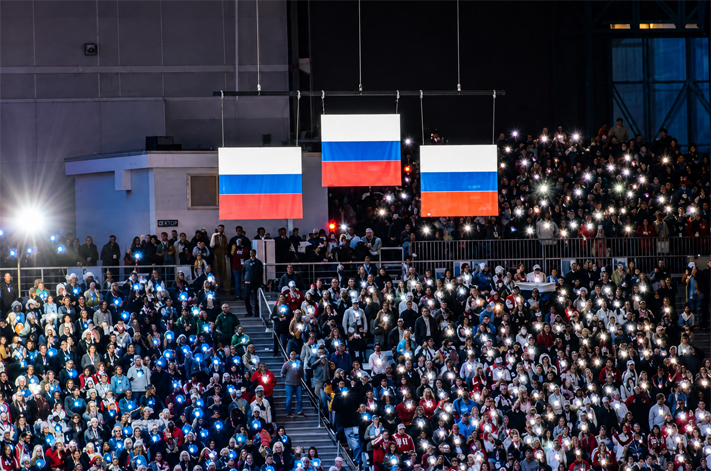
An IOC statement reported, “The decision was taken following a thorough analysis by the IOC’s Legal Affairs Commission, considering that the ROC no longer includes as its members any regional sports organizations in territories falling under the jurisdiction of the National Olympic Committee (NOC) of Ukraine.” It is not yet clear whether Russia will be permitted to use its flag and anthem at LA28. “The IOC will take a decision in relation to the display of the Russian flag, anthem, colours or any identifications for the Olympic Games at the appropriate time,” the statement continued.
Although Turner’s assessment of the current political environment between the US and Russia as a proxy “Cold War 2.0” might yet be accurate, it will be interesting to gauge the effect of this latest IOC decision on the attitudes of sports and government officials in Russia.
Will echoes of the 1980 and 1984 boycotts reverberate in the months preceding the 2028 Los Angeles Games?
The events of those years warn that political wars fought indirectly on international sporting stages infringe the Olympic Movement’s ability and responsibility to cultivate sports diplomacy among athletes and bring about positive political change.
In addition to our website, you can also find information on Olympic history, personalities and stories on our social media platforms facebook, twitter and instagram @ISOHOlympic and Via Linked at LinkedIn: isoh.org/linkedin
There are no comments published yet.